(Web development · 7 min read · October 6, 2026)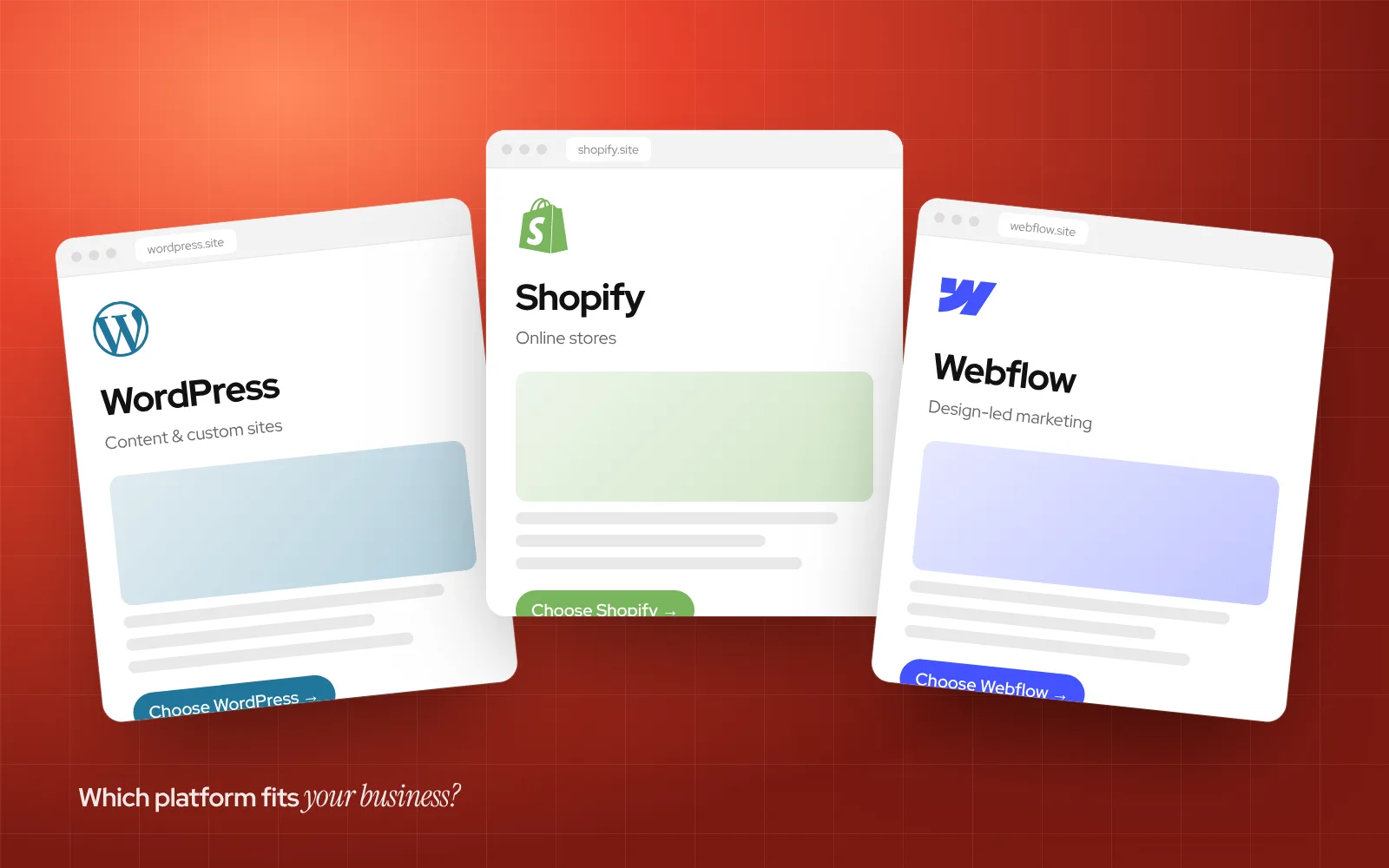
WordPress, Shopify or Webflow? How to choose the right platform for your business.
The platform decides how fast you launch, how easy your site is to run and what it costs to grow. Here is how I help clients choose — without the hype.
01
Start with what the website has to do.
Before comparing platforms, write down the job: generate leads, sell products, publish content, or show a portfolio. A lead-generation site for a clinic has very different needs from a store with 800 products. The right platform is the one that makes your main job easy — not the one with the longest feature list.
02
Shopify: the fastest path to selling online.
If selling products is the core of your business, Shopify is usually the safest choice. Hosting, security, checkout and payments are handled for you, and the app ecosystem covers reviews, subscriptions, upsells and shipping. You pay a monthly plan plus apps, but you avoid most maintenance work. I recommend Shopify for brands that want a reliable store they can manage without a developer on call.
03
WordPress: maximum flexibility and content power.
WordPress runs a huge share of the web for a reason. It is excellent for content-heavy sites, blogs, service businesses and custom functionality, and WooCommerce turns it into a capable store. The trade-off is responsibility: hosting, updates, backups and security need care. Built properly — a lightweight custom theme, few plugins and a clear editing experience — WordPress is fast, SEO-friendly and very cost-effective over time.
04
Webflow and Framer: design-led marketing sites.
Webflow and Framer shine when the brand experience matters most: startups, agencies, SaaS landing pages and portfolios with rich animation. Your team edits content visually, hosting is included and performance is strong out of the box. They are less suited to complex stores or heavy custom logic, but for a polished marketing site that launches quickly, they are hard to beat.
05
Compare total cost, not just the price tag.
Look at the next two to three years: platform fees, apps or plugins, hosting, maintenance and how often you will need a developer for small changes. A cheaper build on the wrong platform often costs more later. I always map these costs out with clients before we decide, so there are no surprises after launch.
06
SEO, speed and AI search work on every platform — if built right.
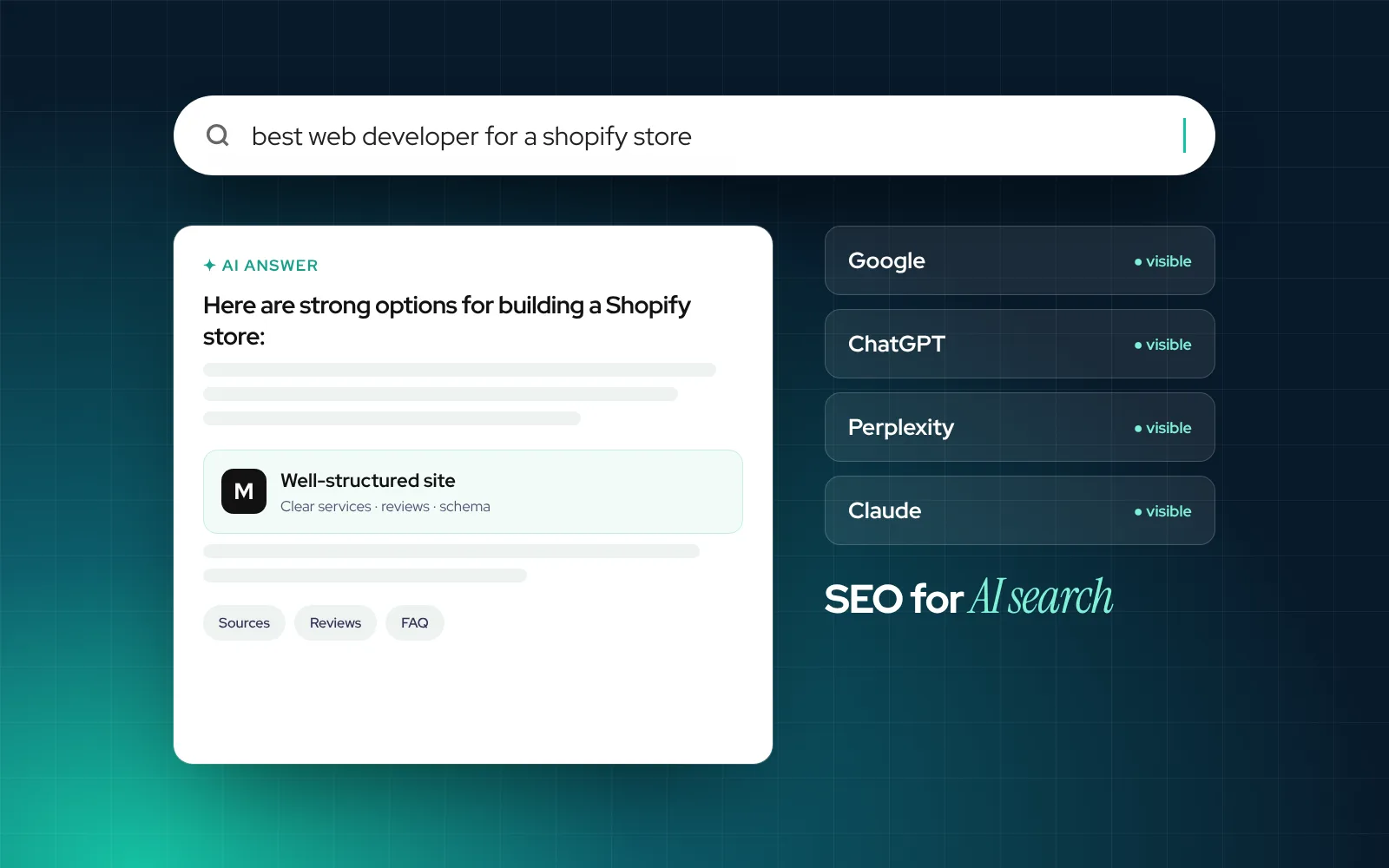
No platform guarantees rankings. What matters is clean structure, fast pages, good content, proper metadata and structured data so Google and AI assistants like ChatGPT understand your business. All four platforms can achieve this when the build is done carefully.
07
My simple rule of thumb.
Selling products first? Shopify. Content, custom features or a tight budget? WordPress. A design-led marketing site your team edits visually? Webflow or Framer. Still unsure? Send me a short brief — I will recommend the platform that fits your goals, timeline and budget, and explain why.
Need help?
Website Design & Development
Responsive sites planned for real business goals. See the service →
Author
Mansur Alam — independent web developer and digital partner with 8+ years of experience. About me →
(Keep reading)
More insights
Start your project with Mansur.
Book a discovery chat
We'll talk through your idea, your timeline and the clearest way to build it — no pitch decks, no pressure.